Linear Track Lighting for Living Walls
Linear Track Lighting for Living Walls
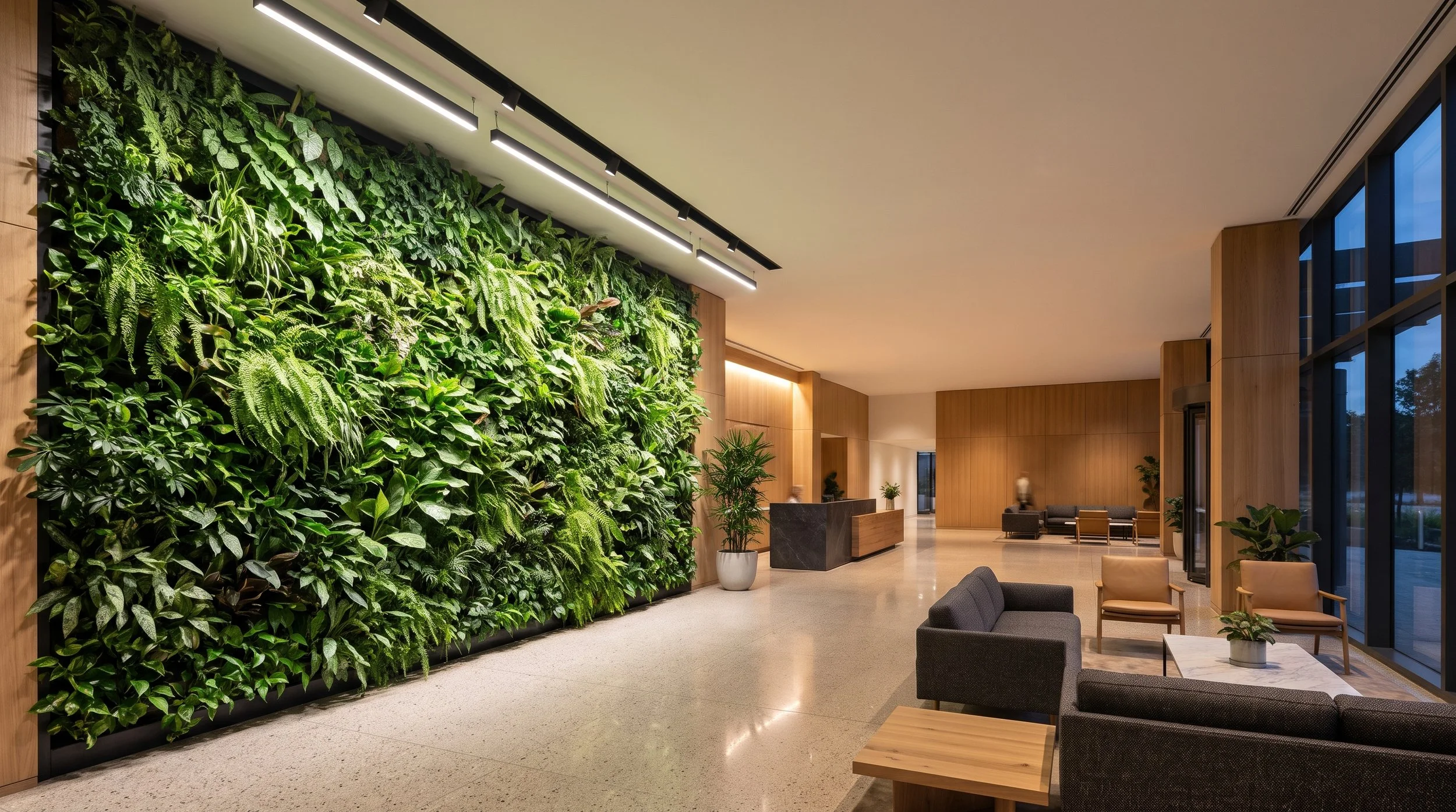
Linear LED track light bars mounted on a ceiling track provide a sleek, architectural way to illuminate indoor vertical living walls (such as Florafelt Recirc units). By combining multiple linear bars along a continuous rail, you achieve even light distribution across the full width and height of the foliage without bulky industrial grow fixtures.
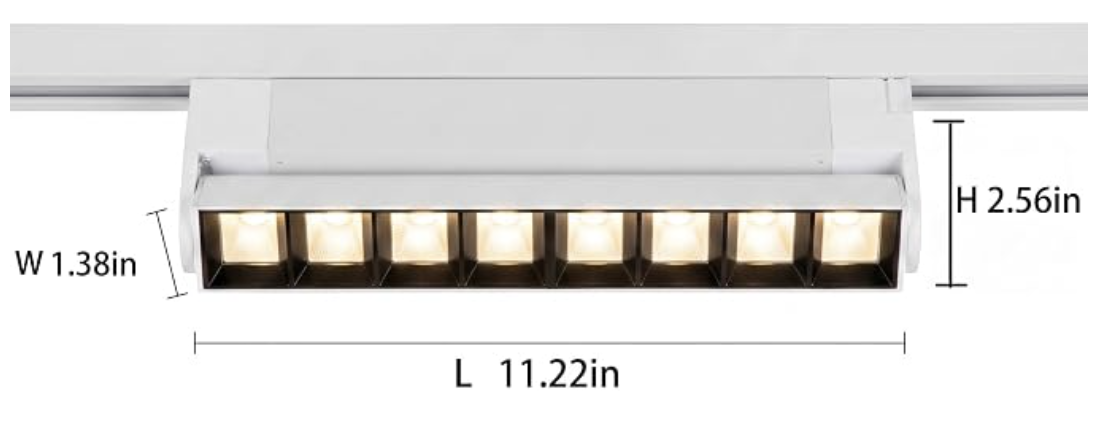
TuyuBEE 20W Linear H-Track Head.
Available on Amazon: https://a.co/d/01FunngO
Unlike round spotlights that create harsh hot spots or cause direct glare in the room, this linear multi-cell fixture spreads smooth, 2,000-lumen illumination evenly across the foliage. It features deep anti-glare louvers, tucks cleanly against an H-track rail, and lets us set the color temperature to 5000K daylight to ensure the plants get the proper spectrum to thrive.
Why This Fixture Works
Low-Glare Anti-Dazzle Louver: The deep multi-cell black baffle eliminates harsh lateral glare into the living space while throwing focused light downward.
High Output per Foot: Delivering 2,000 lumens at 20W per fixture.
On-Board CCT Tuning: The selectable 5-color switch allows you to lock in 5000K or 6000K for plant photosynthesis, while leaving room to dial back to 4000K if the client finds the daylight tone too stark in a residential setting.
Architectural Profile: Sitting just 2.56 inches tall, it reads as an integrated architectural element rather than an awkward clip-on grow fixture.
Overview & Core Specifications
Color Temperature: 5000K – 6500K (Daylight)
Rich in the 400–500 nm blue spectrum required for vegetative growth, compact internodes, and lush leaf density.
Track System Compatibility: Standard H-Type, J-Type, or L-Type (match fixture base)
Ensures secure snap-in installation and continuous power distribution.
Fixture Form Factor: Rotatable linear track bars (1 ft to 3 ft segments)
Allows tilting the beam directly toward the plant face rather than pointing straight down.
Color Rendering Index (CRI): 90+ CRI
Accurately renders natural leaf coloration and texture in residential or commercial interiors.
Placement & Geometry Guidelines
Proper fixture distance and tilt angle prevent foliage burning at the top while delivering adequate light to the bottom rows.
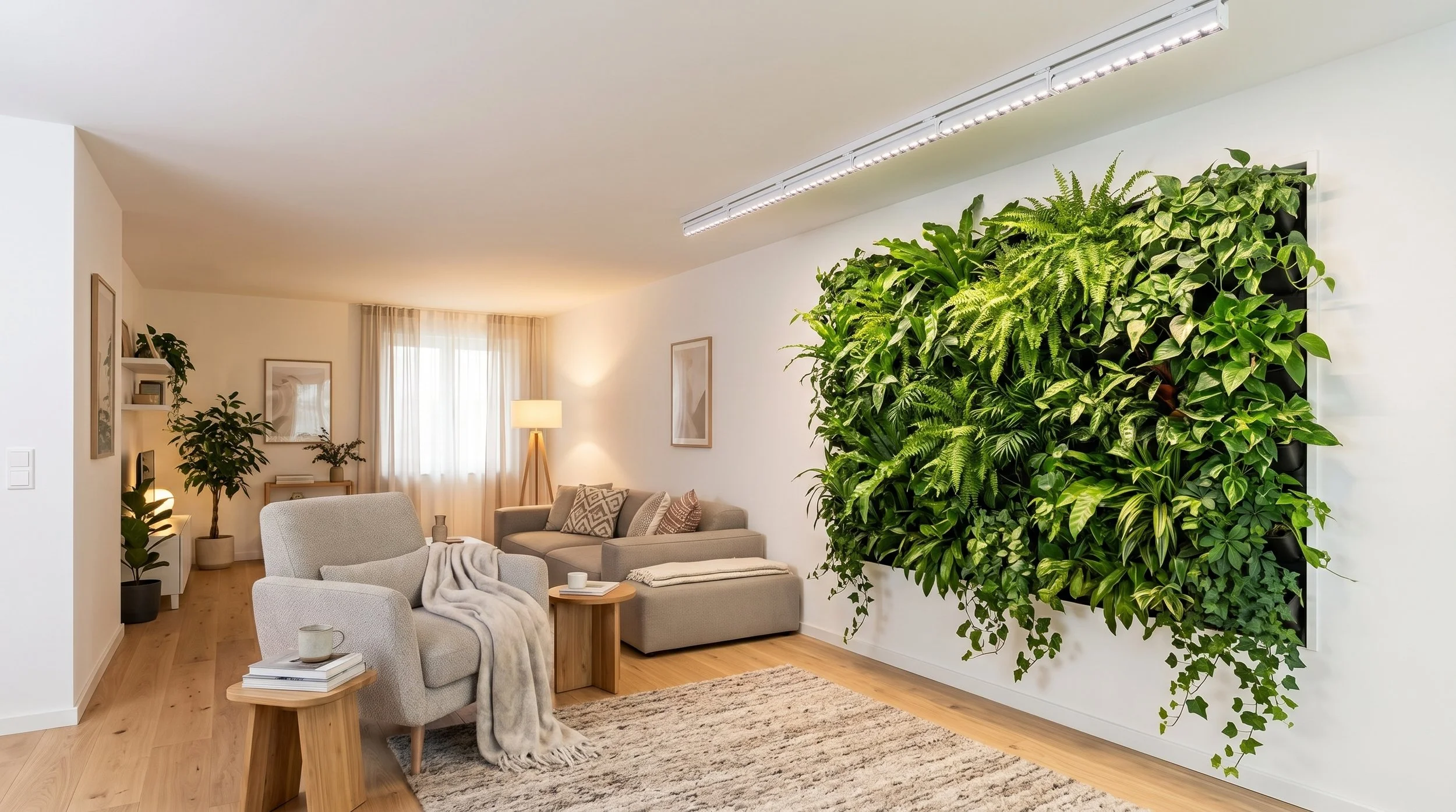
Ceiling Offset Distance: Position the track rail 24 to 36 inches (60–90 cm) out from the face of the living wall.
Aiming Angle: Tilt the rotatable bars 30° to 45° relative to the vertical wall. Aim the primary beam core at the middle-to-lower third of the living wall to equalize coverage across the entire vertical plane.
Track Length & Fixture Count: Match or slightly exceed the overall width of the planter wall.
Photometrics & Target Levels
For typical indoor living wall species (such as Philodendron cordatum, Maranta, Nephrolepis ferns, and Anthurium):
Light Intensity at Foliage:
Top Canopy: ~400–800 Foot-Candles
Mid Canopy: ~250–500 Foot-Candles
Base Canopy: Minimum 150 Foot-Candles
Photoperiod (Duration): Run the fixtures on an automatic digital or smart timer for 12 to 14 hours per day.
This provides an adequate Daily Light Integral (DLI) of 4–8 mol/day
Ideal for low-to-medium light tropical understory plants.
Installation & Power Setup
Power Feed Selection:
Hardwired Canopy: Feeds power directly through an existing ceiling junction box for a clean, flush appearance.
Plug-in Live End Conduit: Uses a track end connector with an integrated cord routed down an adjacent corner to a standard wall receptacle.
Mounting the Track: Secure the track channel parallel to the wall using toggle bolts for drywall or direct anchoring into ceiling joists.
Snapping & Aligning Fixtures: Insert the linear bars into the track channel, engage the locking levers, and rotate the fixtures so the LED lenses face the plant foliage.
Cord Concealment: If using a surface cord, secure it with low-profile cable raceways or paintable clips flush with the ceiling junction.
Plant Selection & Foliage Placement Strategy
Arrange plants vertically according to their natural light tolerance:
Top Tier (Highest Intensity): Place light-loving, fast-spreading varieties like Epipremnum (Pothos), Maranta leuconeura, and hardy Philodendron.
Middle Tier (Moderate Intensity): Best for broadleaf understory plants, Syngonium, Aglaonema, and Anthurium.
Lower Tier (Lowest Intensity): Dedicate the base to shade-tolerant ferns and trailing heartleaf philodendrons that thrive in lower ambient light levels.