
Why Small Pots are a Big Problem for Living Walls
Living walls—those stunning vertical displays of greenery—have become a popular design element in modern architecture. They promise to transform concrete spaces into vibrant, lush ecosystems. However, many of these walls rely on a design choice that sets them up for long-term failure: the use of small containers, often the 4-inch pots plants are initially sold in. While this may save on construction costs, it creates a maintenance nightmare that prevents the wall from truly thriving.
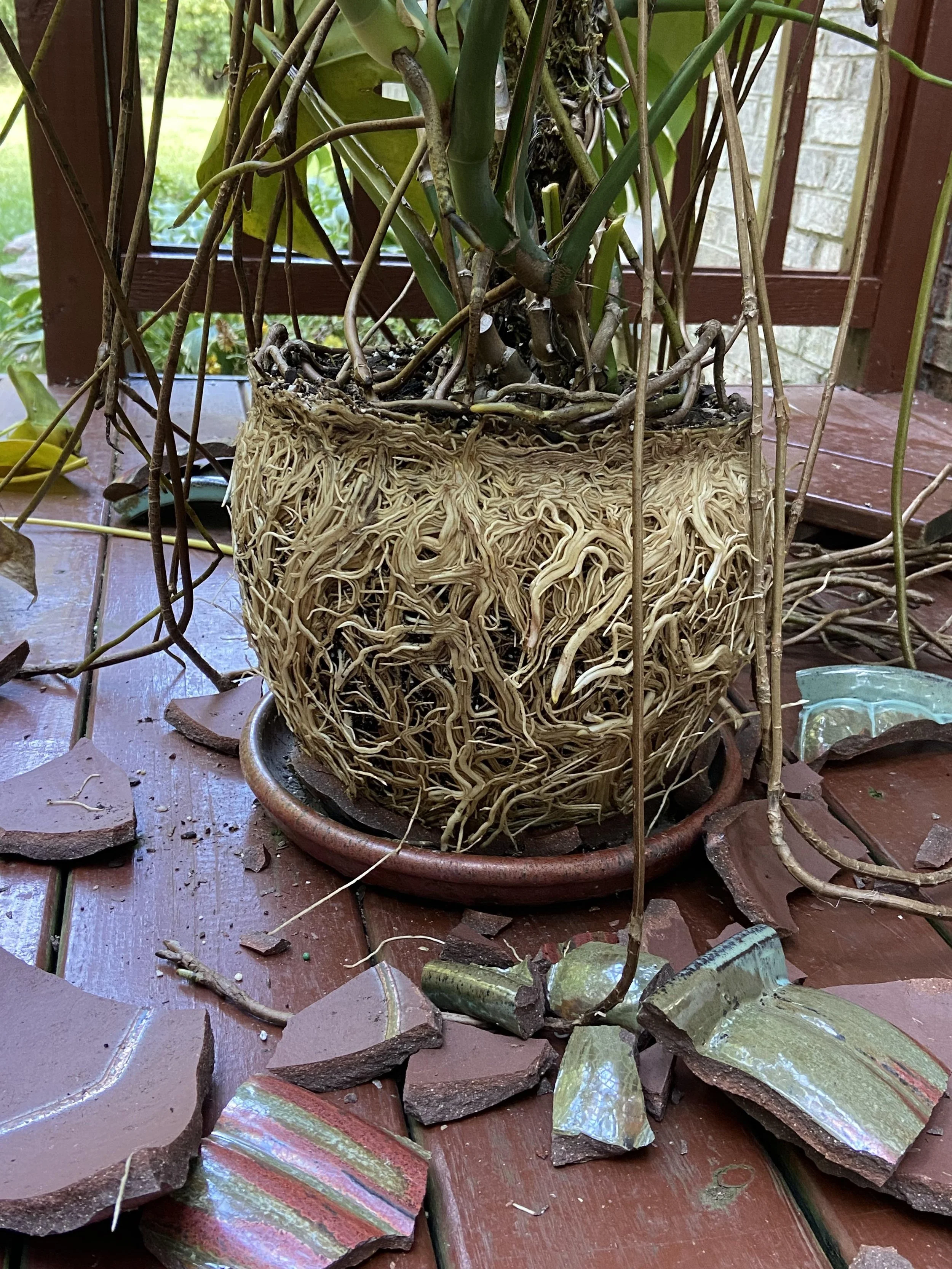
Root-bound potted plant. source
The Root of the Problem: Root-Bound Plants
The core issue lies in the plant's ability to grow. Common living wall plants like pothos and philodendrons are fast growers. In a small 4-inch pot, their roots quickly run out of space, becoming "root-bound." This means the roots start to circle and form a dense, compacted mass. When this happens, the plant can no longer efficiently absorb the water and nutrients it needs. Instead of putting energy into growing beautiful, large leaves, the plant becomes stressed, its growth slows down, and new leaves often emerge smaller and weaker. What was once a lush wall soon develops noticeable patches of unhealthy, yellowing, or dead foliage.
Increased Maintenance and Cost
The use of small containers shifts the burden from the design phase to ongoing maintenance. The small volume of soil in a 4-inch pot has very little capacity to hold moisture. As the plant gets more root-bound, the soil dries out extremely fast, sometimes requiring watering multiple times a day. This demands a perfectly functioning, complex irrigation system. If that system fails for even a short period, widespread plant death can occur quickly. Furthermore, to maintain the wall's aesthetic, you'll face the arduous task of regularly replacing or repotting hundreds of plants, which is costly, labor-intensive, and defeats the purpose of a long-lasting installation.
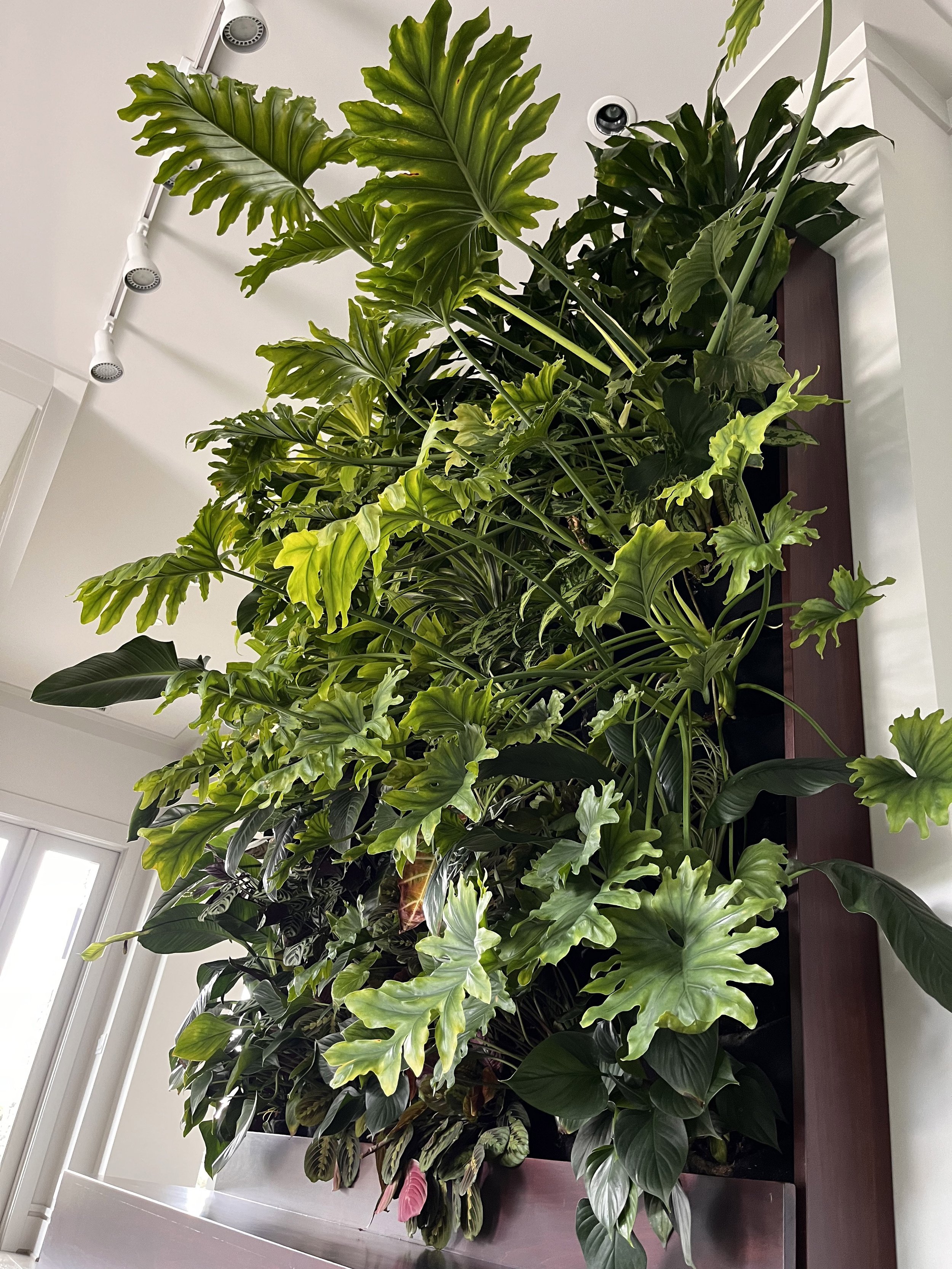
Philodendron Selloum growing in Florafelt Pockets.
The Water and Nutrient Challenge
A dense root ball also creates issues with feeding. Even with a liquid fertilizer injected into the water, the plant may struggle to take it up due to the lack of fresh, spacious soil. In fact, severely root-bound soil can become hydrophobic—meaning it repels water. When you water, the moisture simply runs around the dense mass of roots and out of the pot without being absorbed. This is an ironic problem for a system that is constantly being watered and leads to the plants showing signs of both drought and nutrient deficiency simultaneously.
Choosing a Sustainable Solution
For a living wall to be a successful, long-term feature, it must prioritize the health of its plants. Designers should opt for systems that provide a larger volume of growing medium where roots can spread, such as continuous felt layers or bigger, interconnected planters. While these systems may have a higher initial setup cost, they offer a far better return on investment. They require less frequent watering, keep plants healthier for longer, and drastically reduce the need for constant, costly plant replacement. Choosing a more robust system ensures your vertical garden remains a vibrant, low-stress feature for years to come.
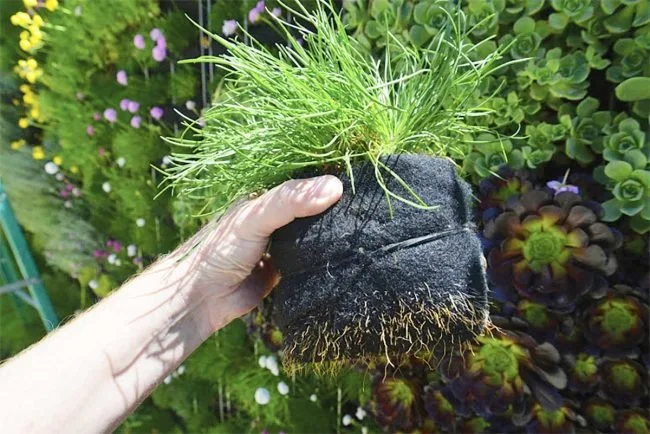
Hedge Grass showing roots in a Florafelt Root Wrap.
Felt systems allow roots to grow into the system unbound
The Florafelt system is designed to mitigate the problem of plants becoming root-bound, a common issue in small-pot vertical gardens. Instead of rigid plastic containers, the system uses soft, breathable felt pockets. When a plant, such as a pothos or philodendron, is placed in a pocket, its roots are encouraged to grow out of the original soil mass and into the surrounding felt fibers. This process, known as "root wrapping," allows the roots to access a much larger volume of material than the original pot provided, effectively mimicking how roots spread in the ground. The felt keeps the roots oxygenated and moist, promoting a healthier, more extensive root system that can better absorb nutrients, which prevents the tight coiling and stress associated with being root-bound.